Miami Fire Rated Glass Certified for High-Rise and Hurricane-Resistant Building Codes

In Miami’s demanding construction environment, where high-rise residential towers and hurricane-resistant structures dominate the skyline, fire-rated glazing must satisfy a dual mandate: life safety compliance under the Florida Building Code (FBC) and structural resilience against severe windborne debris. Antifires supplies certified fire-rated glass systems engineered to meet the rigorous requirements of the 8th Edition (2023) FBC, specifically for egress corridors, stairwells, and interior partitions in mixed-use developments. These assemblies undergo testing per ASTM E119 and NFPA 252 to deliver integrity and insulation ratings ranging from 45 to 120 minutes, aligning with the International Building Code (IBC) adoption in Miami-Dade County. Additionally, integration with Miami-Dade Notice of Acceptance (NOA) protocols ensures that glazing systems can withstand high-velocity hurricane zone (HVHZ) conditions without compromising fire resistance. For architects and specifiers, this means selecting glass compositions—such as multi-layer laminated structures with intumescent interlayers—that provide both thermal barrier performance and impact resistance. Antifires supports local projects with certified documentation, including NOA references and shop drawings, to streamline permitting. Explore our 90-minute fire-rated glass solutions for stairwell enclosures, or consult the Florida Building Commission for official code updates.

Adherence to Florida Building Code and Miami-Dade County Product Control Requirements

Compliance with the Florida Building Code (FBC), particularly the 8th Edition (2023), requires fire-resistance-rated glazing in high-rise egress corridors and stairwells to demonstrate verified performance under standard fire tests. Miami-Dade County further mandates a Notice of Acceptance (NOA) for products installed in High Velocity Hurricane Zones (HVHZ), ensuring that glazing assemblies resist windborne debris impact while maintaining fire integrity. Antifires’ systems integrate fire-rated glass within steel or thermally broken aluminum frames, tested to ASTM E119 for fire resistance and ASTM E1886/E1996 for impact resistance. The multi-layer glass construction, featuring intumescent interlayers, provides both thermal insulation and structural stability during fire exposure. For coastal projects, framing materials are treated to resist saltwater corrosion, preserving long-term performance. This dual compliance is critical for mixed-use towers where egress paths must remain operational during a fire event. Specifiers can review our 60-minute fire-rated glass with insulation for corridor applications, ensuring alignment with FBC Chapter 7 requirements.

Fire Rated Glass Classification: Selection of UL 263 and UL 10C Rated Glazing for Mixed-Use Developments

Selecting the appropriate fire-rated glass classification for Miami’s mixed-use developments requires understanding the interplay between UL 263 (bearing wall fire tests) and UL 10C (positive pressure fire tests for door assemblies). Antifires offers glazing systems rated from 45 to 120 minutes, tested under ASTM E119 and NFPA 252 standards, ensuring compliance with IBC fire-resistance requirements for egress corridors, stairwells, and separation walls. The table below outlines typical ratings and their applications in Miami high-rise projects:

Fire RatingTest StandardTypical ApplicationGlass Construction
45 min (Integrity)ASTM E119Interior partitions, low-rise egress6mm laminated with intumescent interlayer
60 min (Integrity + Insulation)NFPA 252Corridor doors, hospitality suitesMulti-layer gel-filled assembly (e.g., 26mm)
90 min (Integrity)ASTM E119Stairwell enclosures, high-rise egress10mm FPOS or 15mm composite
120 min (Integrity + Insulation)UL 263Fire-rated walls, elevator lobbies50mm multi-layer insulated structure

For coastal humidity and saltwater exposure, aluminum framing systems are anodized or powder-coated to prevent corrosion, while intumescent seals maintain performance in moist environments. Antifires’ 120-minute fire-rated glass with insulation provides enhanced thermal barrier for critical separation zones.

Integration of Fire Rated Systems into Miami’s High-Rise Residential and Hospitality Projects

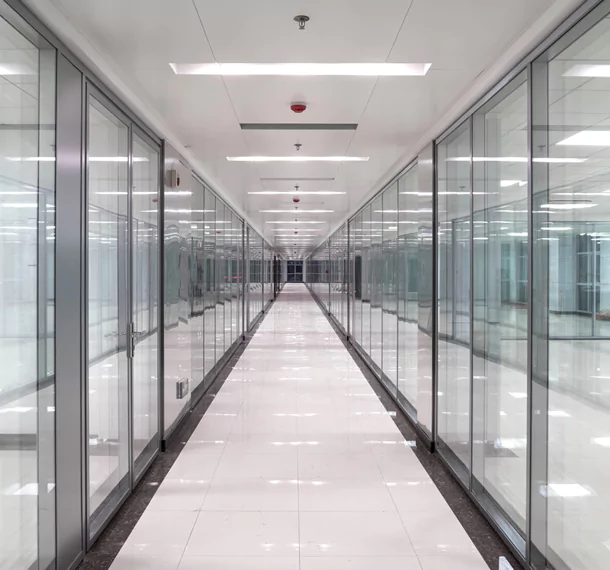
Miami’s high-rise residential and hospitality sectors demand fire-rated glazing that integrates seamlessly with architectural designs while meeting stringent life safety codes. Antifires’ systems are tailored for egress corridors, stairwells, and interior partitions in towers exceeding 75 feet, where the FBC requires 1-hour fire-resistance-rated enclosures. The multi-layer glass composition—such as the 26mm door glass (5mm + 5.5mm gel + 5mm + 5.5mm gel + 5mm) or 28mm EI60 panels—provides integrity up to 90 minutes and insulation up to 68 minutes, verified under BS EN 1634-1 and ASTM E119. For hospitality projects, glazing must also resist radiant heat transmission (EW rating) to protect adjacent spaces. Installation involves steel or thermally broken aluminum frames with ceramic wool seals (3–6mm, density 210 kg/m³) and intumescent fire seals (20mm × 4mm) to maintain fire integrity during deflection. This ensures that in a fire event, glazed assemblies contain flames and heat while preserving visibility for emergency egress. For partition walls, our fire-rated glass partitions offer customizable configurations for open-plan layouts.

Antifires’ Miami-Specific Compliance Support and Expedited Code Approval Documentation

Antifires provides comprehensive compliance support for Miami projects, including certified shop drawings, NOA documentation, and test reports aligned with Florida Building Code and Miami-Dade County requirements. Each glazing system is accompanied by a Notice of Acceptance (NOA) verifying windborne debris impact resistance for HVHZ zones, alongside fire test reports per ASTM E119 or UL 10C. The documentation process includes detailed framing specifications, glass composition data (e.g., 10mm FPOS: 3mm float + 4mm gel + 3mm float), and installation guidelines for expansion gaps (3–5mm filled with ceramic fiber) and anchor bolt spacing (300–600mm). This expedites building permit submissions and ensures that fire-rated assemblies meet both life safety and structural integrity standards. Antifires also offers pre-approval consultations to verify that selected products align with project-specific fire resistance durations—whether 60, 90, or 120 minutes—and impact ratings. For mixed-use developments, this includes coordinating with architects to integrate glazing into steel or concrete frames without compromising fire performance. Request a project quote to receive tailored documentation and code compliance verification.

REQUEST A QUOTE

Fill the form below to get in touch with us.

click

Frequently Asked Questions (FAQ)

Yes, Antifires fire-rated glass systems are designed to meet Miami-Dade County’s High Velocity Hurricane Zone (HVHZ) impact standards while maintaining fire resistance ratings. Each assembly undergoes testing per ASTM E1886/E1996 for windborne debris impact and ASTM E119 for fire integrity. The multi-layer glass construction, featuring intumescent interlayers and reinforced steel frames, provides both thermal barrier performance and structural resilience against missile impacts. Products are accompanied by a Notice of Acceptance (NOA) from Miami-Dade County, verifying compliance with HVHZ requirements for egress corridors and stairwells in high-rise buildings.

Under the Florida Building Code (FBC), 8th Edition (2023), egress corridors in high-rise residential buildings typically require a 1-hour fire-resistance rating (60 minutes) for glazed assemblies. This applies to corridors serving as means of egress in buildings with occupied floors located more than 75 feet above the lowest level of fire department access. Antifires supplies 60-minute fire-rated glass systems with both integrity and insulation (EI60) ratings, tested per ASTM E119 or NFPA 252, ensuring compliance with FBC Chapter 10 requirements for egress path protection.

Yes, Antifires provides certified shop drawings and Notice of Acceptance (NOA) documentation to support Miami building permit submissions for fire-rated partition systems. Each project receives detailed drawings specifying glass composition, frame dimensions, sealant types (e.g., ceramic wool, intumescent seals), and anchor bolt spacing, all aligned with Florida Building Code requirements. The NOA documentation verifies compliance with Miami-Dade County’s HVHZ impact standards and fire resistance ratings, enabling streamlined approval from local building departments. Contact Antifires for tailored documentation packages.