Sylhet Fire Rated Glass: Certified Solutions for Bangladesh BNBC 2020 Compliance

In the rapidly urbanizing landscape of Sylhet, Bangladesh, ensuring building safety against fire hazards has become a paramount concern for architects, developers, and facility managers. Compliance with the Bangladesh National Building Code (BNBC 2020), particularly Part 8, which governs fire protection, is not merely a regulatory requirement but a critical component of life safety and property protection. Antifires provides certified fire rated glass solutions that are rigorously tested to international standards such as BS 476 Part 22 and BS EN 1634-1, ensuring full alignment with BNBC’s stringent mandates for compartmentation and egress. For Sylhet’s diverse projects—from high-rise residential towers along the Surma River to commercial plazas in Zindabazar and hospital wings in Uposhohor—these glazing systems deliver verified integrity (E) and insulation (I) ratings ranging from 30 to 120 minutes. By integrating these tested assemblies, building owners can achieve robust passive fire protection that meets local fire authority expectations. For further official documentation on the national code requirements, stakeholders can refer to the BNBC 2020 Part 8 official document.

Sylhet Building Construction Fire Safety Standards Under BNBC 2020 Part 8

Under the BNBC 2020 framework, Part 8 explicitly defines passive fire protection requirements for buildings based on occupancy type, height, and floor area. For Sylhet’s growing inventory of high-occupancy structures—such as hotels near Osmani International Airport and multi-story commercial complexes—the code mandates that fire-resisting glazing used in stairwell enclosures, corridor partitions, and fire barriers must achieve a minimum fire resistance rating. Antifires’ systems, tested to BS 476 Part 22 and BS EN 1364-1, provide certified ratings such as EI 60 (60 minutes integrity and insulation) and EI 120 (120 minutes integrity and insulation), directly satisfying these local mandates. The assemblies utilize G.M.S. hollow steel frames, ceramic wool seals (density 210 kg/m³), and intumescent fire seals (20mm × 4mm) to maintain compartmentation integrity under furnace test conditions, where maximum deflection toward the furnace is controlled within 38mm to 152mm. This technical alignment ensures that Sylhet’s commercial and residential projects can achieve the required fire-resistance levels without compromising design flexibility.

Fire Rated Glass Grade Selection for Sylhet’s Humid Subtropical Climate

Sylhet’s subtropical monsoon climate, characterized by high humidity and significant temperature fluctuations, poses unique challenges for fire-rated glazing systems. Condensation within sealed units or degradation of edge seals can compromise both thermal performance and fire resistance over time. Antifires addresses these environmental stresses through specialized laminated ceramic interlayers and edge sealants that have been tested for tropical durability, including ISO 9227 salt-spray resistance. The glass structures, such as the 21mm FPOS (multi-layer composite insulated fire-resistant glass) and 28mm EI60 panels (6mm + 5.5mm gel + 5mm + 5.5mm gel + 6mm), incorporate intumescent gels that activate under fire exposure while maintaining optical clarity under normal conditions. Additionally, local fire authority inspections in Sylhet increasingly reference NFPA 80 for installation tolerances, particularly for fire door and glazing assemblies. Antifires provides comprehensive documentation for each project, including installation gap specifications (3mm–5mm expansion gaps filled with ceramic fiber) and fixing schedules (M6/M8 anchor bolts at 300–600mm spacing), ensuring full compliance with BNBC Chapter 8’s egress and fire stop requirements for the city’s expanding mixed-use developments.

Sylhet Commercial and Residential Project Demands for Fire Partition Systems

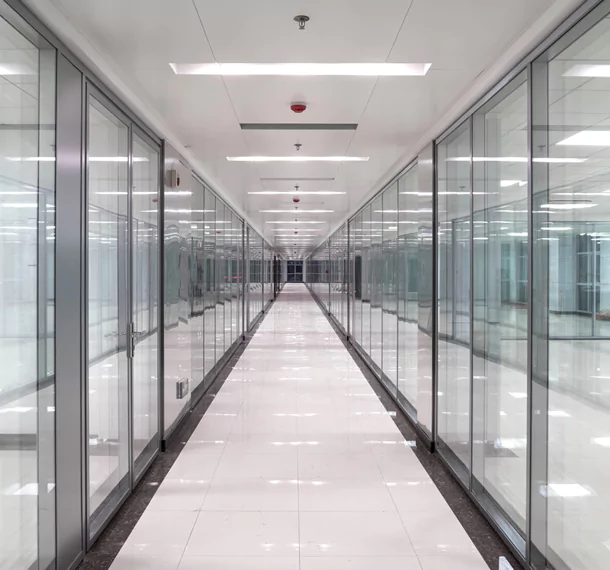
The rapid urbanization of Sylhet has driven demand for specialized fire partition systems in critical infrastructure projects, including new hospital wings in Uposhohor and shopping complexes in Zindabazar. These environments require fire rated glass partitions that provide smoke-tight seals for corridors and stairwells, directly supporting occupant egress and fire department access. Antifires’ 90-minute fire doors and glazed screens, tested to BS 476 Part 22, achieve integrity ratings up to 90 minutes and insulation ratings up to 68 minutes (as seen in 26mm door glass assemblies: 5mm + 5.5mm gel + 5mm + 5.5mm gel + 5mm). These systems are designed to meet BNBC occupancy load requirements for public assembly areas, where fire compartmentation must prevent fire and smoke spread for a minimum of 60 minutes. The use of ceramic wool (3mm–6mm thickness) and intumescent seals within the frame ensures that the assembly remains smoke-tight under positive furnace pressure conditions (0 ±2Pa after 5 minutes), a critical factor for maintaining tenable conditions in escape routes. For Sylhet’s mixed-use developments, these partitions offer a balance of transparency and fire safety, enabling natural light transmission while meeting rigorous local code standards.

Antifires Brand Advantages for Sylhet Buyers: Local Compliance Support and Lead Times

For Sylhet buyers, selecting a fire-rated glass supplier involves evaluating compliance support, lead times, and product reliability. Antifires distinguishes itself by providing comprehensive local compliance assistance, including remote and on-site technical support for installation per NFPA 80 and BNBC 2020. This is particularly valuable for high-rise residential towers along the Surma River, where lightweight fire window solutions are required to reduce structural load without sacrificing fire performance. Antifires’ E-class 120 fire-rated windows, certified to BS 476 Part 22, offer clear visibility while maintaining structural integrity during fire exposure—a key specification for Sylhet’s 10+ story building projects. The glass structures, such as the 50mm/54mm ultra-high-performance glass (multi-layer insulated fire-resistant structure), achieve integrity and insulation ratings up to 120 minutes, ensuring compliance with the most demanding local requirements. Additionally, Antifires’ supply chain capabilities ensure competitive lead times for Sylhet’s fast-paced construction schedules, with all systems backed by certified test data from accredited laboratories. This combination of technical expertise, local code knowledge, and product reliability makes Antifires a trusted partner for fire partition solutions in the region.

REQUEST A QUOTE

Fill the form below to get in touch with us.

click

Frequently Asked Questions (FAQ)

Under BNBC 2020 Part 8, fire-rated glazing in Sylhet commercial buildings is typically required to achieve a minimum 60-minute fire resistance rating (EI 60) for stairwell enclosures and corridor partitions. This rating ensures both integrity (E) and insulation (I) performance, meaning the glass must prevent flame and hot gas penetration while limiting the temperature rise on the unexposed side to an average of ≤140°C and a maximum of ≤180°C. For specific high-occupancy or high-risk areas, such as fire command centers or egress paths serving large floor plates, a higher rating of EI 90 or EI 120 may be mandated by the local fire authority. Antifires supplies systems certified to these ratings under BS 476 Part 22 and BS EN 1634-1, ensuring full compliance with BNBC requirements. Developers and architects should consult the BNBC 2020 document and local Sylhet fire department guidelines to confirm the exact rating needed for their specific occupancy classification and building height.

Antifires ensures its fire-rated glass withstands Sylhet’s monsoon humidity and heat through the use of laminated ceramic interlayers combined with edge sealants tested to ISO 9227 salt-spray resistance standards. This construction prevents moisture ingress and fogging between glass layers, a common issue in tropical climates. The glass structures, such as the 21mm FPOS and 28mm EI60 panels, incorporate multi-layer designs with intumescent gels that remain stable under high humidity and temperature variations. Additionally, the frame systems utilize ceramic wool seals (density 210 kg/m³) and intumescent fire seals (20mm × 4mm) that maintain their fire-resistant properties even after prolonged exposure to Sylhet’s environmental conditions. These assemblies have been tested in ambient conditions ranging from 27°C to 36°C and relative humidity levels between 43% and 90%, replicating the real-world climate challenges of Sylhet. This ensures long-term durability and consistent fire performance throughout the product’s lifecycle.

Yes, Antifires offers both remote and on-site technical support for Sylhet projects, including comprehensive installation guidance per NFPA 80 and BNBC 2020. This support covers critical aspects such as frame fixing schedules (M6/M8 anchor bolts at 300–600mm spacing), expansion gap management (3mm–5mm filled with ceramic fiber), and proper sealant application using ceramic wool and intumescent seals. Antifires’ team can review project-specific shop drawings and installation plans to ensure alignment with local code requirements and manufacturer specifications. For complex installations, such as those in high-rise towers or healthcare facilities, on-site visits can be arranged to verify that the glazing systems are installed correctly, maintaining the certified fire resistance ratings. This level of support helps Sylhet developers and contractors avoid common installation errors that could compromise fire performance, ensuring that the passive fire protection system performs as intended during a fire event.