Birmingham UK Certified Fire Rated Glass for Building Regulations Compliance

Birmingham's architectural landscape, from the revitalised Snow Hill district to the expanding residential towers in the city centre, demands a rigorous approach to passive fire protection. Compliance with the UK Building Regulations 2010, particularly Approved Document B (Fire Safety), is non-negotiable for all commercial and multi-occupancy residential projects. Antifires supplies certified fire rated glass and framing systems that have been rigorously tested to BS 476 Part 22: 1987 and BS EN 1634-1: 2014. These standards are the benchmark for fire resistance in non-loadbearing glazing and door assemblies across the United Kingdom.

For Birmingham specifiers, the critical distinction lies between Integrity (E) and Insulation (I) performance. While standard toughened glass may offer basic integrity for a limited duration, Antifires' advanced glazed systems provide certified EI30, EI60, and EI120 ratings, ensuring both containment of flames and control of dangerous heat transmission. This is essential for maintaining compartmentation in escape routes and fire-resisting doorsets as required by local fire safety strategies. The West Midlands Fire Service guidance further reinforces the need for verified, third-party tested products. For detailed regulatory context, professionals can consult the official Approved Document B guidance published by the UK Government.

Every Antifires system is engineered to meet these localised demands, providing a reliable barrier that supports life safety and property protection across Birmingham's diverse building stock.

Meeting Birmingham Building Regulations with BS 476 and EN 1634-1 Fire Standards

Birmingham’s building control authorities require demonstrable evidence of fire performance for all glazed elements used in compartment walls and protected shafts. Antifires’ systems are designed to meet these exacting standards, with test data derived from furnace conditions that simulate a real fire scenario. For instance, assemblies tested to BS 476 Part 22 and BS EN 1634-1 are subjected to a controlled temperature curve, with unexposed side temperature rises strictly limited: an average rise of no more than 140°C and a maximum rise of 180°C for insulation classification.

The structural integrity of the framing system is as critical as the glass itself. Antifires utilises G.M.S. hollow steel sections combined with ceramic wool (density 210 kg/m³) and intumescent fire seals (20mm x 4mm) to prevent gap penetration and sustained flaming. This integrated approach ensures that the entire assembly—glass, frame, and sealant—acts as a unified fire barrier. For Birmingham projects ranging from high-rise apartments to mixed-use commercial blocks, selecting a system with verified Integrity (E) and Insulation (I) performance is essential for achieving the required period of fire resistance, typically 30, 60, or 120 minutes as dictated by the building’s height and occupancy.

Selecting Fire Rated Glass Grades for Birmingham’s Diverse Architectural Projects

The selection of fire rated glass for Birmingham’s architectural projects must account for both the required fire resistance period and the specific application. For internal vision panels in fire doors serving escape routes, a product offering E60 integrity may suffice, but for partitions adjacent to high-risk areas, an EI60 or EI120 system is necessary to control radiant heat. Antifires provides a range of glass compositions, including multi-layer structures with intumescent gel layers that activate under heat, forming an opaque insulating barrier.

Consider the following performance grades and their typical applications in Birmingham developments:

Glass TypeIntegrity (min)Insulation (min)Common Application
10mm FPOS13516Integrity-only doors & partitions
26mm Door Glass89-9068Fire-resisting doorsets in corridors
28mm EI60 Panel6664High-insulation internal screens
50mm EI120120120Compartment walls in high-rise blocks

For Birmingham’s mixed-use developments, where ground-floor retail requires extensive glazing and upper floors demand residential compartmentation, a combination of 120 minute fire rated glass for walls and 60-minute rated doorsets provides a coherent fire strategy.

Birmingham Building Application Scenarios for Fire Rated Doors and Partition Systems

Birmingham’s built environment presents a variety of project scenarios, each with distinct fire safety requirements. In new-build high-rise apartments, such as those in the Broad Street or Jewellery Quarter areas, the primary concern is maintaining compartmentation between flats and protecting common escape routes. Here, EI60 or EI120 rated glass partitions are installed in lobby areas and corridor screens to prevent smoke and heat spread, ensuring residents have a protected means of egress.

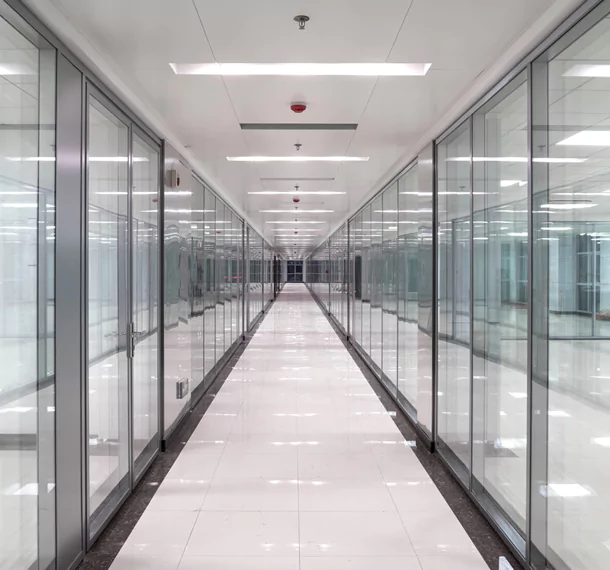
For commercial office refurbishments in buildings like those in the Colmore Business District, fire rated glazing is often required in open-plan layouts to create fire-resisting sub-divisions without sacrificing natural light. Antifires’ fire partition solutions allow for expansive glazed panels that maintain a modern aesthetic while delivering certified performance. In listed building refurbishments, common in Birmingham’s historic areas such as the Gun Quarter, the challenge is to integrate modern fire safety without altering the character of the structure. Antifires provides slim-profile steel frames and fire rated glass that can be fitted into existing openings, meeting the requirements of both Building Control and conservation officers.

Additionally, for ground-floor retail units and restaurants, fire rated glazing is used to separate the public area from the kitchen or storage spaces, ensuring compliance with local fire authority inspections.

Why Antifires Is the Preferred Fire Rated Glass Partner for Birmingham Specifiers

Antifires has established itself as a trusted partner for Birmingham specifiers by providing products that are not only certified but also backed by comprehensive technical support. Every glazing system is supplied with full test documentation to BS 476 Part 22 and BS EN 1634-1, which is directly accepted by Birmingham Building Control and approved inspectors. This eliminates the risk of non-compliance during the approval process.

The company’s expertise extends to the complete assembly, including the frame, sealant, and fixing specifications. Antifires provides detailed installation guidance for M6/M8 anchor bolts at 300-600mm spacing and proper 3-5mm expansion gaps filled with ceramic fibre, ensuring that the system performs as tested. For Birmingham’s complex projects, such as large-scale residential towers or mixed-use developments, Antifires offers pre-application technical consultations to help architects and contractors select the optimal glass composition and framing profile. This proactive approach ensures that fire safety is integrated seamlessly into the design, rather than being an afterthought. By combining certified performance with local regulatory knowledge, Antifires delivers confidence and clarity for every Birmingham specification.

REQUEST A QUOTE

Fill the form below to get in touch with us.

click

Frequently Asked Questions (FAQ)

For Birmingham commercial buildings, the required fire resistance rating is determined by the building’s height, use, and specific compartmentation strategy as outlined in Approved Document B. Typically, fire rated glass in escape routes and fire-resisting doorsets must achieve a minimum of 30 minutes (E30) integrity. For compartment walls separating flats or commercial units, a higher rating of 60 minutes (E60) or 120 minutes (E120) is often mandated. When insulation (I) is required to protect escape routes from radiant heat, systems rated EI30 or EI60 are specified. Antifires supplies glass and framing systems certified to BS 476 Part 22 and BS EN 1634-1 for all these performance levels.

Yes, all Antifires fire rated glass and door systems are supplied with comprehensive test reports and third-party certification from accredited laboratories. These documents are based on tests conducted to BS 476 Part 22: 1987 and BS EN 1634-1: 2014, which are the standards recognised by Birmingham Building Control and the West Midlands Fire Service. The test data includes furnace pressure conditions, thermocouple readings, and failure mode analysis (e.g., cotton pad ignition, sustained flaming). Specifiers can submit these certified reports directly to building control bodies for approval, ensuring a smooth and compliant regulatory process.

Yes, Antifires has extensive experience supplying fire rated glazing for historic and listed building refurbishments. The company offers slim-profile steel frames and fire rated glass that can be custom-fitted to existing openings without compromising the building’s character. For Birmingham’s listed structures, such as those in the Gun Quarter or Jewellery Quarter, Antifires provides systems that achieve the required E60 or EI60 performance while maintaining a traditional aesthetic. The use of intumescent seals and ceramic wool within a minimal frame profile ensures that fire safety is integrated discreetly, meeting both conservation officer requirements and modern building regulations.