Tucson Fire Code Adoption of IBC and NFPA 80 Standards for Passive Fire Protection
Tucson’s fire code framework is built upon the International Building Code (IBC) 2021 edition, with specific amendments that address the region’s elevated wildfire hazard and the need for robust compartmentation in commercial structures. Under IBC Chapter 7, fire-resistance-rated glazing must meet the fire-test exposure criteria defined in ASTM E119 or UL 263, with performance classifications for integrity (E), insulation (I), and radiation control (W). Antifires’ fire rated glass assemblies are designed to satisfy these classifications, providing certified solutions for 60-minute, 90-minute, and 120-minute fire-resistance ratings as required by occupancy type and building height. For example, egress corridors in Tucson’s healthcare facilities often demand a 1-hour fire-resistance rating with insulation, which Antifires meets with 28mm EI60 glazing panels that achieve 66 minutes of integrity and 64 minutes of insulation under BS EN 1634-1 test conditions. Additionally, NFPA 80 governs the installation and maintenance of fire doors and fire windows, requiring annual inspections by qualified personnel to verify that all components—including glazing, gasketing, and hardware—remain functional. Antifires supports Tucson contractors by providing assemblies that incorporate intumescent seals and ceramic wool edge protection, ensuring that the glazing system maintains its fire-resistive performance throughout the building’s lifecycle. For projects near the Sonoran Desert interface, where ember intrusion and radiant heat pose additional risks, Antifires offers fire partition solutions with enhanced insulation performance to limit temperature rise on the unexposed side, thereby protecting adjacent compartments and egress paths.
Selecting Fire Rated Glass with ASTM E119 and UL 263 Ratings for Tucson’s Climate
Selecting the appropriate fire rated glass for Tucson’s climate requires careful evaluation of ASTM E119 and UL 263 ratings, as these standards define the fire-resistance performance under controlled furnace conditions that simulate a fully developed fire. Antifires’ product portfolio includes glazing systems that achieve integrity-only ratings (E60, E90, E120) and combined integrity and insulation ratings (EI30, EI60, EI120), each suited to specific building code requirements. For instance, vision panels in fire doors and corridor walls often require a 45-minute or 60-minute fire-resistance rating with insulation to protect occupants during egress. Antifires’ 26mm door glass, composed of a multi-layer structure with intumescent gel interlayers, achieves 89–90 minutes of integrity and 68 minutes of insulation, making it suitable for 60-minute rated door assemblies in Tucson’s commercial buildings. The glass composition—typically 5mm float glass layers with 5.5mm gel interlayers—undergoes controlled cracking and intumescent activation during fire exposure, forming an opaque insulating barrier that limits heat transmission. For higher-performance applications, such as stairwell enclosures in high-rise structures, Antifires offers 50mm and 54mm ultra-high-performance glazing that achieves 120 minutes of both integrity and insulation, verified through furnace tests with Type K thermocouples monitoring unexposed surface temperatures. Tucson’s enforcement of NFPA 80 mandates that all fire door and window assemblies be inspected annually, and Antifires supports this requirement by providing factory-labeled products with traceable test reports. Contractors should verify that the glazing system includes compatible framing, intumescent seals, and ceramic tape to ensure the assembly meets the tested configuration, as any deviation can compromise the fire-resistance rating and lead to inspection failures.
Commercial and Municipal Building Applications for Fire Rated Systems in Tucson
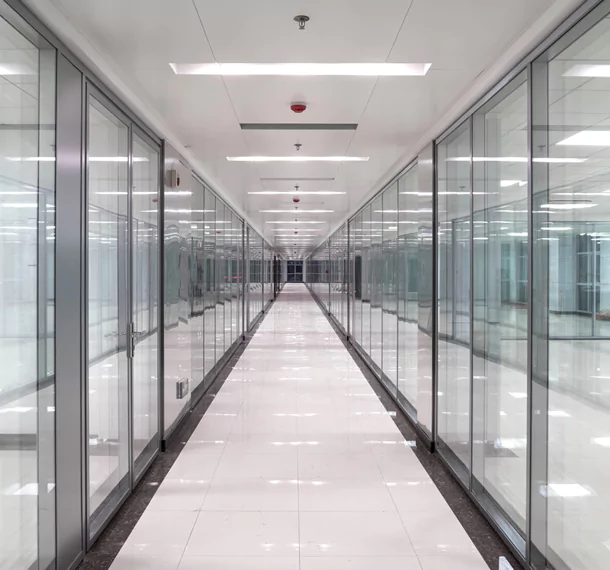
Tucson’s expanding healthcare and education sectors present distinct challenges for passive fire protection, requiring fire rated glass that balances life safety with operational visibility. In hospitals and outpatient clinics, fire rated partitions in corridor walls and stairwell enclosures must provide a minimum 1-hour fire-resistance rating while allowing natural light and visual monitoring for patient safety under ADA guidelines. Antifires supplies fire rated glass partitions that achieve EI60 and EI120 ratings, using multi-layer composite structures with intumescent gel to maintain insulation performance during a fire. For K-12 schools in the Tucson Unified School District, fire rated glazing in egress corridors and assembly spaces must meet IBC requirements for fire-resistance-rated separation, often with a 20-minute or 45-minute rating for vision panels in doors. Antifires’ 10mm FPOS glass, with an integrity rating of 135 minutes and insulation of 16 minutes, provides a cost-effective solution for these applications, though higher insulation performance may be required for spaces adjacent to fire-rated walls. Municipal buildings, including fire stations and government offices, require fire rated windows and glazed systems that withstand the thermal exposure of a fully developed fire while preventing flame spread to adjacent compartments. Antifires’ 21mm FPOS glass, achieving 120 minutes of integrity and 30 minutes of insulation, is suitable for 60-minute rated wall assemblies in these facilities. The selection of fire rated glass for Tucson’s commercial projects must also consider the local climate, as the dry heat and UV exposure can affect the long-term stability of intumescent interlayers. Antifires’ products are manufactured with UV-stabilized gel formulations and tested under ambient conditions of 27°C to 36°C, ensuring reliable performance in Tucson’s desert environment.
Why Tucson Architects and Contractors Trust Antifires for Certified Fire Protection Products
Architects and contractors in Tucson choose Antifires for certified fire protection products because of the company’s commitment to testing, labeling, and local supply chain reliability. Every fire rated glass assembly from Antifires is factory-labeled with the fire-resistance rating, testing standard, and manufacturer identification, providing clear traceability for building code officials and fire marshals. This labeling eliminates the risk of inspection delays, as the City of Tucson Fire Department requires documentation that the installed assembly matches the tested configuration. Antifires maintains a distribution partnership in the Southwest, enabling rapid lead times for Tucson construction schedules, which is critical for projects with tight deadlines in the healthcare and education sectors. The company’s product range includes single-layer and double-layer fire rated glass, as well as glass blocks and glass bricks, all tested under BS 476 Part 22, BS EN 1634-1, and ASTM E119 standards. For example, the 28mm EI60 panel achieves 66 minutes of integrity and 64 minutes of insulation, making it a reliable choice for 60-minute rated door and partition assemblies. Antifires also provides technical support for installation, including guidance on frame construction using G.M.S. hollow steel sections, ceramic wool edge sealing, and intumescent fire seal placement. This level of support ensures that Tucson contractors can install fire rated glass systems correctly, maintaining the fire-resistance rating and complying with NFPA 80 inspection requirements. By partnering with Antifires, architects and contractors gain access to a comprehensive portfolio of fire door systems and glazed assemblies that meet the specific demands of Tucson’s building code environment.